Getting Back to Growth: Strategy Won’t Save You. Implementation Will.
 CEOs are ready to get back to growth.
But growth today looks very different from even a few years ago. It is no longer just about capital, capacity, or timing. It depends on whether organizations can execute complex plans in a world of tighter constraints.
Energy availability, grid capacity, water access, permitting timelines, and physical limits now shape what is feasible. What looks sound in the boardroom can fall apart in delivery.
That is where growth is won or lost.
Implementation: Where Growth Lives or Dies
Growth strategies do not fail because the ambition is wrong. They fail because execution cannot keep up.
Whether building new data centers, reshoring manufacturing, or electrifying operations, the same challenges keep coming up:
- Securing enough energy and equipment.
- Sequencing upgrades without disrupting operations.
- Aligning global ambition with local constraints.
- Allocating capital across competing priorities.
These are no longer edge cases. They are the critical path.
We are already seeing it. Data center projects are being delayed or stalled before construction even begins, often because power and critical equipment are not in place. That is an execution problem.
A strong implementation plan must secure and sequence energy, permitting, supply chain, workforce, and capital before final investment decisions are made. Without that, even the best strategy will stall.
The companies moving fastest today are those that can absorb complexity without letting it slow execution.
AI and Data: Compressing the Distance from Strategy to Execution
The next shift is operational, and it’s where we think the real work gets done.
Used well, AI and advanced analytics now give leaders earlier signals on the things that quietly derail a plan: projects drifting off pace, capital sitting where it shouldn’t, approvals stacking up, and resources about to run short.
When you catch that friction in days instead of quarters, you actually have time to fix it.
The aim is for execution to become continuous rather than episodic. Small corrections, made often, beat massive recoveries. And, speed isn’t the only point here, resilience is. A plan that bends to reality holds up better than one built to be admired on the side.
Growth and Sustainability Are No Longer Trade-offs
The same execution mindset applies to sustainability. One of the most persistent misconceptions at the executive level is that growth and sustainability sit in tension.
Done right, sustainability is about building resilient infrastructure that enables growth under constraint. It helps organizations manage energy volatility, supply-chain risk, regulatory pressure, and resource scarcity without losing momentum.
We have seen that in our own factories. Through Schneider Electric’s Zero Carbon Project, we turned an emissions goal into a practical execution model, working with more than 2,700 suppliers and exceeding our 50% Scope 1 and 2 reduction target. The result was not just lower emissions, but stronger data, better prioritization, and more resilient operations.
The leaders who succeed design for constraints upfront. They treat energy, emissions, and infrastructure as core design variables.
When they do that, sustainability stops slowing execution and starts strengthening it.
The Next Era of Growth
The companies that will lead the next decade share one trait: They have systematized execution.
They approach growth with three disciplines:
- Board-backed implementation plans with clear funding, milestones, and accountability tied to outcomes.
- Rigorous risk management across the stages where delivery can break down.
- Integrated execution systems that use data and technology to identify and remove friction from design through operations.
Growth is no longer a strategy exercise.
It is an execution capability.
The question for every CEO isn't "Do you have a growth strategy?"
It's "Do you have an execution system that gets projects financed, built, and operated?"
Those answering yes will own the next decade.
.
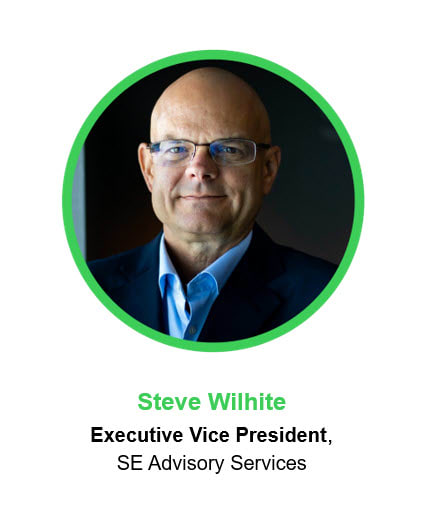
Steve Wilhite